The First RFID-Tracked Bike Shipments
In June 2026, Bikeflights became the first bicycle shipping company to offer built-in RFID tracking, in collaboration with UPS. The technology had previously been reserved for critical healthcare shipments such as organs and vaccines. Bikeflights and UPS made RFID labels available to cyclists for the first time ahead of the annual RAGBRAI ride in July 2026.
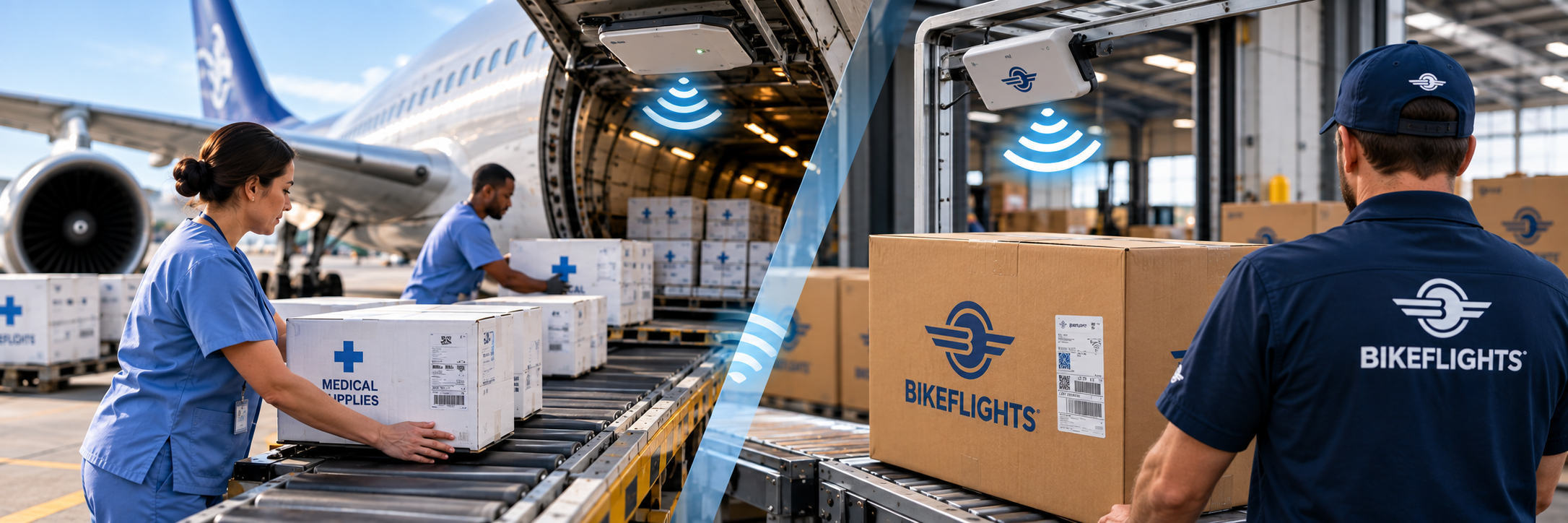
A technology borrowed from organ transport
RFID is not exactly new. It has been used for years where the consequences of losing a parcel are severe: transplant organs, vaccines, temperature-controlled pharmaceuticals.
In those categories, knowing that a shipment cleared a specific facility at a specific minute is more than just a convenience, it is absolutely necessary.
Sure, bicycles are not organs, but they are high-value, irreplaceable, time-sensitive items moving through a network where a missed scan means real anxiety for the person waiting for their bike to arrive for a race or important ride.
Why a bicycle shipping company was first to implement RFID
Bikeflights has shipped bikes since 2009 and has served more than 1.7 million shipments for individuals, bike shops, events and cycling industry businesses. That volume produced a clear pattern: many of the tracking complaints were not about bikes going missing entirely, they were about shipments that appeared to be stalled out (due to the lack of obvious activity with barcode scans). Boxed bikes are oversized, which means they are frequently handled off the automated sorting line, which means barcode scans get skipped. RFID does not require more scanning discipline, it eliminates it all together!
Built into operations, not bolted on
The distinguishing feature of the Bikeflights implementation is where the data comes from. The scans happen inside UPS’s own operations, using the same infrastructure that routes the parcel. Each scan feeds the customer’s Bikeflights shipment status page directly and in near real time. That means the rider, the Bikeflights team and the carrier are all looking at one record. Nobody is reconciling a consumer GPS tracker against an operational one.
“Shipping a bike is an exercise in trust, and riders want to track exactly where their bike is at any time. Embedding RFID into the way we already handle and scan packages means everyone in the chain: the rider, our team and the carrier, is looking at the same information. That shared visibility builds confidence into the shipment itself, from the moment the box leaves until it arrives at the door.”
— William Alcorn, President, Bikeflights, in a 2026 press release
RAGBRAI 2026
The rollout of RFID shipping was timed for RAGBRAI 2026. Taking place every July in Iowa, RAGBRAI is one of the largest events (and shipping moments) in North American cycling. Every year, thousands of bikes converge in one place for one week and then scatter. Beginning in 2026, Bikeflights provided RFID-enabled labels to participating riders, and all bikes were delivered on-time.